
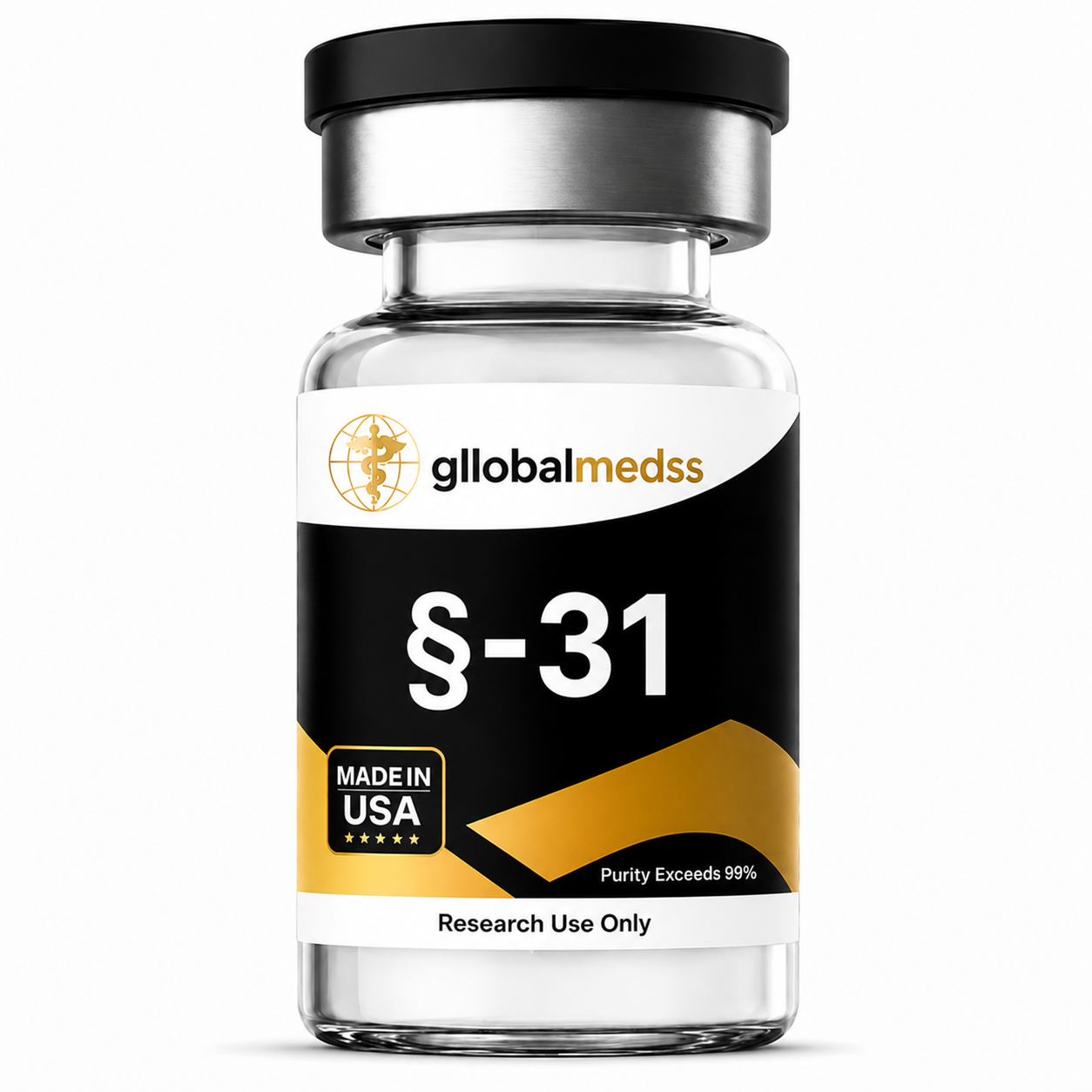
Buy §-31 Online
Buy §-31 Online. The search phrase “ §-31 Peptide ” can lead to websites that discuss peptides, laboratory compounds, scientific research materials, and experimental products. Before evaluating any product described as a §-31 peptide, researchers should first establish the exact identity of the compound and understand its intended use.
Peptide research continues to attract attention because scientists use different peptide molecules to investigate biological pathways, cellular signalling, molecular interactions, and other areas of biomedical science. However, an online product listing does not automatically establish a compound’s identity, purity, safety, effectiveness, or regulatory status.
Researchers should therefore approach online peptide information carefully. Product names can vary between suppliers, and marketing descriptions may not provide enough technical information to identify a compound accurately.
This guide explains how to research §-31 peptide information online, evaluate product documentation, assess supplier transparency, and distinguish experimental materials from approved medicines.
What Is a §-31 Peptide?
The designation §-31 peptide can appear as a product or research term online, but readers should verify the exact scientific identity before concluding the material.
A product name alone may not provide sufficient information about a peptide’s amino-acid sequence, molecular characteristics, formulation, purity, or intended application. Researchers should request or review technical documentation that clearly identifies the material.
When researching an unfamiliar peptide, useful information can include:
- Exact scientific name
- Amino-acid sequence, when applicable
- Molecular weight
- Chemical formula
- CAS information, when available
- Manufacturer information
- Product specifications
- Batch or lot number
- Certificate of analysis
- Purity information
- Storage requirements
- Intended-use statement
Researchers should verify these details before comparing products from different suppliers.
Why Peptide Identity Matters
Peptides can have highly specific molecular structures. Even small differences in sequence, modification, formulation, or purity can create important differences between compounds.
For that reason, researchers should not assume that two products share identical characteristics simply because both suppliers use the same marketing name.
A reliable product description should provide enough information to identify the material accurately. Technical documentation can help researchers determine whether a product matches the specifications required for a particular laboratory project.
Researchers should also distinguish between a product’s commercial name and its scientifically recognised identity.
Understanding §-31 Peptide Online Listings
People searching for “Buy §-31 Peptide Online” may encounter different types of websites. Some websites provide educational information, while others list laboratory materials or experimental compounds.
Online listings can differ significantly in quality and detail.
Before evaluating a listing, researchers should check whether the supplier provides:
- A clear product identity
- Technical specifications
- Manufacturer information
- Batch information
- Analytical testing
- Certificate-of-analysis documentation
- Storage instructions
- Intended-use information
- Appropriate regulatory information
- Accessible customer support
Clear documentation gives researchers a stronger basis for evaluating a product than promotional language alone.
Why a Certificate of Analysis Matters
A certificate of analysis (COA) can provide useful batch-specific information about a research material.
Depending on the product and laboratory, a COA may report information about identity, purity, testing methods, and other quality-control characteristics.
Researchers should examine the document carefully rather than treating every COA as automatic proof of quality. Check the laboratory name, testing date, batch number, analytical methods, and reported results.
The documentation should correspond to the specific product or batch under consideration.
Researchers should also consider whether an independent laboratory performed the testing and whether the analytical method appropriately evaluates the characteristics being reported.
Peptide Research and Scientific Applications
Scientists use peptides in many areas of laboratory research. Researchers can investigate peptide structure, molecular interactions, receptor activity, cellular signalling, protein pathways, and other biological mechanisms.
Experimental peptide research can contribute to scientific understanding without establishing a medical application.
Researchers should interpret findings according to the type of study involved. A laboratory experiment can provide an initial observation, while animal research can provide additional information. Controlled human clinical research requires a different level of evidence.
This distinction helps prevent scientific findings from becoming exaggerated marketing claims.
Research Materials Versus Approved Medicines
An important consideration when researching any peptide involves the distinction between experimental research materials and approved medicines.
Regulatory authorities evaluate approved medicines for specific indications and conditions of use. Approved products receive official labelling that identifies their approved applications, warnings, contraindications, manufacturing standards, and other requirements.
A peptide sold online for laboratory research does not automatically receive the same regulatory status.
Researchers should therefore avoid assuming that a product has medical approval simply because a website describes it using medical terminology.
Before making any health-related decision, individuals should obtain information from qualified healthcare professionals and appropriate regulatory sources.
Evaluating a §-31 Peptide Supplier
When researching §-31 peptide online, supplier transparency provides an important starting point.
Researchers can ask several practical questions:
- Does the supplier clearly identify the compound?
- Does the website provide technical specifications?
- Does the supplier provide a COA?
- Does the documentation correspond to the current batch?
- Does the company identify the manufacturer?
- Does the product page explain its intended use?
- Does the website avoid unsupported medical claims?
- Does the supplier provide storage information?
- Does customer support answer technical questions clearly?
These questions help researchers separate useful product information from aggressive marketing.
A transparent supplier should provide understandable information and clearly communicate product limitations.
Avoiding Unsupported Peptide Claims
Online peptide advertisements sometimes make broad claims about weight management, muscle growth, recovery, longevity, tissue repair, or other biological effects.
Researchers should approach such statements carefully.
A promotional statement does not equal scientific evidence. Researchers should examine peer-reviewed literature and authoritative sources before accepting claims about an experimental compound.
A responsible evaluation should distinguish among:
- Laboratory observations
- Cell-based studies
- Animal research
- Preclinical research
- Human clinical trials
- Established medical evidence
- Individual testimonials
- Commercial advertising
This approach helps readers understand the actual strength of the available evidence.
Regulatory Considerations
Peptides and research compounds can face different legal and regulatory requirements depending on their exact classification and intended use.
Regulations may address manufacturing, distribution, importation, possession, labelling, research use, and human administration.
An online product listing does not automatically establish regulatory approval. Researchers should consult appropriate authorities to determine the current status of a specific compound in their jurisdiction.
Research institutions should also follow their own purchasing, laboratory, safety, and compliance procedures.
Anyone researching an unfamiliar peptide should verify the applicable rules before acquiring or handling the material.
Responsible Research Practices
Researchers can improve the quality of their work by using multiple independent information sources.
Start by confirming the exact compound identity. Next, review scientific publications and technical documentation. Then examine available analytical testing and relevant regulatory information.
Researchers should maintain appropriate records for experimental materials and follow applicable laboratory procedures for storage, handling, and disposal.
A structured research process reduces confusion between scientific evidence and commercial claims.
Why Intended Use Matters
The phrase “research use only” carries an important distinction.
A research material does not automatically qualify as a medicine or receive authorisation for administration to humans. Researchers should follow the stated intended use and comply with applicable institutional requirements.
Websites should communicate intended use clearly. Clear labelling helps prevent confusion between laboratory research and medical treatment.
Anyone seeking diagnosis or treatment for a medical condition should consult a qualified healthcare professional rather than relying on an experimental peptide.
Online Peptide Research Checklist
Researchers can use this checklist when evaluating a §-31 peptide listing:
Verify the identity: Determine the precise scientific identity of the compound.
Review technical information: Examine specifications such as molecular information and composition where available.
Check testing: Review certificates of analysis and laboratory documentation.
Verify the batch: Make sure testing documents correspond to the relevant lot.
Review intended use: Determine whether the supplier identifies the material as a research product.
Examine scientific evidence: Use peer-reviewed literature rather than relying on testimonials.
Check regulatory information: Consult appropriate authorities for current requirements.
Evaluate supplier transparency: Look for clear company and product information.
Check applicable laws: Regulations can vary between countries and jurisdictions.
Frequently Asked Questions
What is a §-31 peptide?
The designation “§-31 peptide” may refer to a particular product or research designation. Because the name alone may not establish a precise scientific identity, researchers should verify the exact compound and technical specifications.
Why should I verify the peptide’s identity?
Peptides can differ in amino-acid sequence, modifications, purity, and formulation. Accurate identification helps researchers ensure that the material matches their research requirements.
Does an online listing prove peptide quality?
No. An online listing does not independently establish identity, purity, safety, effectiveness, or regulatory approval.
What should researchers look for in a peptide COA?
Researchers should review the laboratory, testing date, batch number, analytical methodology, reported purity, and identity information. The documentation should correspond to the specific material.
Can testimonials prove a peptide’s effectiveness?
No. Testimonials represent individual experiences and cannot replace controlled scientific research.
Is an experimental peptide the same as an approved medicine?
No. Researchers should verify the regulatory status and intended use of a specific compound instead of assuming that an online research product has medical approval.
Final Thoughts
The search phrase “Buy §-31 Peptide Online” can lead to a variety of commercial and scientific resources. Responsible research requires readers to look beyond product names and promotional statements.
Researchers should verify the exact identity of the compound, examine technical specifications, review available analytical documentation, investigate scientific literature, and understand the regulatory requirements that apply in their jurisdiction.
For general information about research-related products and available product documentation, visit https://gllobalmedss.com/.
For website-related inquiries, the provided contact details include:
WhatsApp: +1 (505) 239-4465
Email: globalmeds57@gmail.com
Readers should independently verify important product information and consult appropriate professional or regulatory sources when necessary.
Disclaimer
This article provides general educational and research information. It does not recommend purchasing, administering, or using §-31 peptide or any other unapproved research compound in humans. Product availability, legality, regulatory classification, identity, and intended use can vary by jurisdiction. Researchers should verify current requirements with appropriate regulatory authorities and qualified professionals.
1 review for Buy §-31 Online
Add a review
Related products
Peptide
Peptide
Peptide
Peptide
Peptide
Peptide
Peptide
Mepeber –
I’m very happy that I chose the right website for shopping. The ordering process was smooth, everything arrived as expected, and the overall experience exceeded my expectations. I’ll definitely shop here again and recommend this website to others!